
How Arrest Warrants Work in New Haven
Under NHPD General Order 8.09, an arrest warrant is a judicial order built on probable cause that lets officers take a named person into custody. The path starts with investigators. They gather facts, statements, and other evidence into an application and affidavit. A prosecutor normally reviews it next. Then a Connecticut Superior Court judicial authority weighs whether the legal standard is met. Police never issue the warrant themselves. The Connecticut court-jurisdiction statute supplies the state authority behind both arrest and bench warrants.
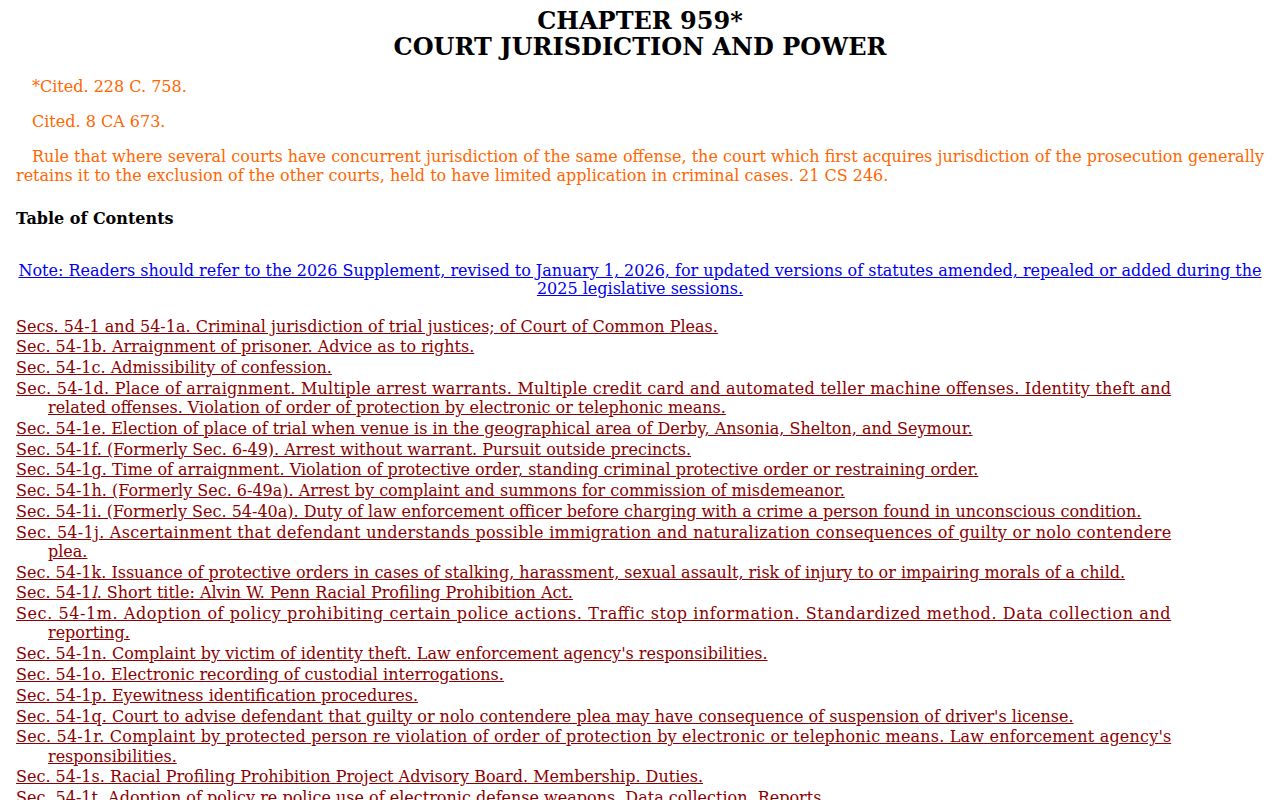
The statute view reinforces the split in roles: the New Haven arrest warrant comes from the court, and an authorized agency serves it. New Haven has no county criminal court. It also has no county sheriff warrant division. Serious Part A cases route through the New Haven Judicial District at 235 Church Street. Part B criminal matters usually go through Superior Court GA 23 at 121 Elm Street instead. Whom you call depends on the issuing location, the case type, and the agency named in the record.
NHPD Probable-Cause Application Path
The NHPD warrant policy ties local police work to the court's probable-cause review. Probable cause means facts and circumstances supporting a reasonable belief that an offense occurred and that the named person was involved. The affidavit is the sworn statement carrying that request. Once the court signs an order, data can flow through the Criminal Motor Vehicle System into PRAWN, which authorized local, state, and federal justice agencies use to find the responsible agency and process service. The public cannot open a PRAWN account. That gap is why a clerk or attorney may need to confirm details that never appear online. Note: A case listing can supply context, but it is not the signed warrant, affidavit, or official certification of current status.
Arrest Warrants: What They Contain
A New Haven arrest warrant record can hold far more than any public interface shows. Court and agency systems may track the name, docket, charge, classification, warrant type, issuing court, issue date, responsible agency, bond or release term, service date, return, and status. The signed application may name the judicial authority and cite a probable-cause affidavit. Not all of it is open. Investigation, safety, sealing, and privacy rules can close off certain fields.
| Docket or case number | Routes the matter to the correct Superior Court file |
|---|---|
| Issuing authority | Identifies the court that approved the order |
| Charge and warrant type | Shows the alleged offense and kind of process |
| Serving agency | May name NHPD, State Police, probation, or another agency |
| Release condition | May show bond or a required presentation, if public |
| Status | May reflect active, served, returned, recalled, or quashed |
A neutral docket pattern such as N23N-CR-26-0000000-S shows the format only; it belongs to no real person. For any New Haven record, the clerk verifies each live field.
New Haven Warrant Review Volume
The New Haven Judicial District 2024 report offers useful workload context. It counts 5,293 arrest-warrant applications reviewed during 2024, plus 1,052 search-warrant applications. Across its annual warrant-review categories, the report lists 6,732 applications. New Haven Police submitted 2,296 and led the district's listed agencies.
These are application counts. They are not counts of active warrants, arrests, or people. The district serves New Haven and other municipalities, so the figures say nothing about the odds that a given name appears in a current search.
How Warrants Get Served in New Haven
NHPD serves a warrant when it is the originating or responsible agency. Other orders may go to another municipal police department, Connecticut State Police, probation officers in suitable VOP cases, or a regional or federal task force. Judicial marshals handle custody and security inside the courthouse. State marshals mostly serve civil process, including certain family-support capias matters, rather than ordinary criminal arrest warrants.
| Agency | Role |
|---|---|
| NHPD | New Haven police warrants, arrests, booking, and agency records |
| Superior Court | Issues the order and controls case and release terms |
| Adult Probation | Supervision contact and some VOP processing |
| State marshal | Civil capias service, chiefly in family-support process |
| U.S. Marshals task force | Federal and qualifying cross-jurisdiction fugitive work |
PRAWN helps authorized agencies locate the responsible agency. A public searcher in New Haven must work instead from the court location, docket, and official contact information.
New Haven Booking and Bail Sequence
After service, the arresting agency books the person and follows the warrant's presentation and release terms. NHPD Booking at (203) 946-7607 answers custody and booking questions, but it is not a public warrant-confirmation line. At GA 23, the official guide lists a bail commissioner, judicial marshals, and cell-block functions, and Bail Services can be reached at (203) 789-7482. The court's options include cash, surety, a licensed bondsperson, real-estate security, personal recognizance, nonfinancial terms, or a required presentation. No official source gives a universal New Haven arrest-warrant bond schedule. A bondsman's fee is not refundable. A court-held cash bond follows clerk refund rules after disposition or an eligible diversion, and bond never disposes of the charge.
The serving sequence is simple in form: service → booking → bail or presentation review → next court date → continued case. The warrant itself can alter that flow, so current court directions control.
Arrest Warrants, Summonses, and Bench Warrants
An arrest warrant, a summons, and a bench warrant are three different doors into court. A summons tells a person to appear without authorizing arrest in the same way. An arrest warrant rests on a probable-cause application. A bench warrant usually answers a missed date or an unmet obligation in a case already open in New Haven.
| Process | Cause | Typical response |
|---|---|---|
| Arrest warrant | Probable cause for an alleged offense | Counsel, planned surrender if available, booking, release, court |
| Summons | Direction to answer a charge | Appear on the stated date and follow the notice |
| Bench warrant | Missed date or court noncompliance | Confirm issuing docket and ask about recall, reset, or surrender |
A civil capias can also order custody after a failure to appear in family-support proceedings. It moves through a different system, so do not mistake it for a New Haven city fine warrant.
Recent New Haven Warrants May Be Hidden
Start with the right expectations. The public VOP/FTA warrant search covers only listed VOP, FTA, and order-to-incarcerate categories, and the site itself warns that other warrant types never appear. New Haven has no fuller public register. The criminal and motor-vehicle case search can add docket facts. It is still not the official record. Gaps have many causes. Entry lag, sealed applications, active-investigation limits, safety withholding, youthful-offender rules, juvenile confidentiality, family process, and federal jurisdiction can all hide a warrant from view. A sealed indictment is a charging instrument kept back until a court approves disclosure. That is not a public warrant listing, and sealed federal materials may stay unavailable even where PACER shows the docket.
Key point: No online result is a negative warrant certificate; verify a suspected New Haven warrant with the issuing clerk or counsel.
Handling an Arrest Warrant in Your Name
No New Haven office promises a walk-in surrender window, a warrant amnesty event, or a guaranteed bond result. Asking at a police station is risky. The visit itself can trigger an immediate arrest. A safer route is court first, with counsel. The right parties can then identify the warrant, its issuing court, and a safe, planned appearance or surrender process.
- Gather the legal name, birth date, notice, docket, and possible agency information.
- Check the limited warrant page and related criminal docket for court context.
- Call GA 23 at (203) 789-7461 or the Judicial District clerk at (203) 503-6800.
- Consult a Connecticut defense attorney or public defender if eligible.
- Ask whether a planned appearance, walk-through, surrender, or bond arrangement is available.
- Follow the court's direction, obtain release papers, and keep the next court date.
Act carefully: Do not ignore an active arrest warrant or rely on an old screen; confirm the order and plan with counsel.
Confirming New Haven Service or Recall
Start with the New Haven clerk who owns the docket. GA 23 handles local Part B criminal matters at 121 Elm Street. Serious Part A cases belong to the New Haven Judicial District at 235 Church Street. Ask directly. Was the warrant executed, returned, recalled, quashed, or replaced? Request the current docket entry or order when one exists. Clerks explain process, though they cannot give legal advice. For police paperwork, NHPD Records at (203) 946-6312 explains how to request NHPD reports or arrest records. New Haven's City FOIA process takes written requests by portal, email, mail, or hand delivery. It does not reach Judicial Branch files or PRAWN, and open investigations or protected facts may be withheld or redacted. NHPD's non-emergency line, (203) 946-6316, is not a warrant certification service. Then keep proof. Hold the court order, booking or release paper, receipt, and next-date notice, and ask when the online record should update. A served warrant proves execution, not closure. The criminal case continues until the court resolves it.